



… and Compares Against Exam Bodies That Actually Work
By Adewale Omo-Oba
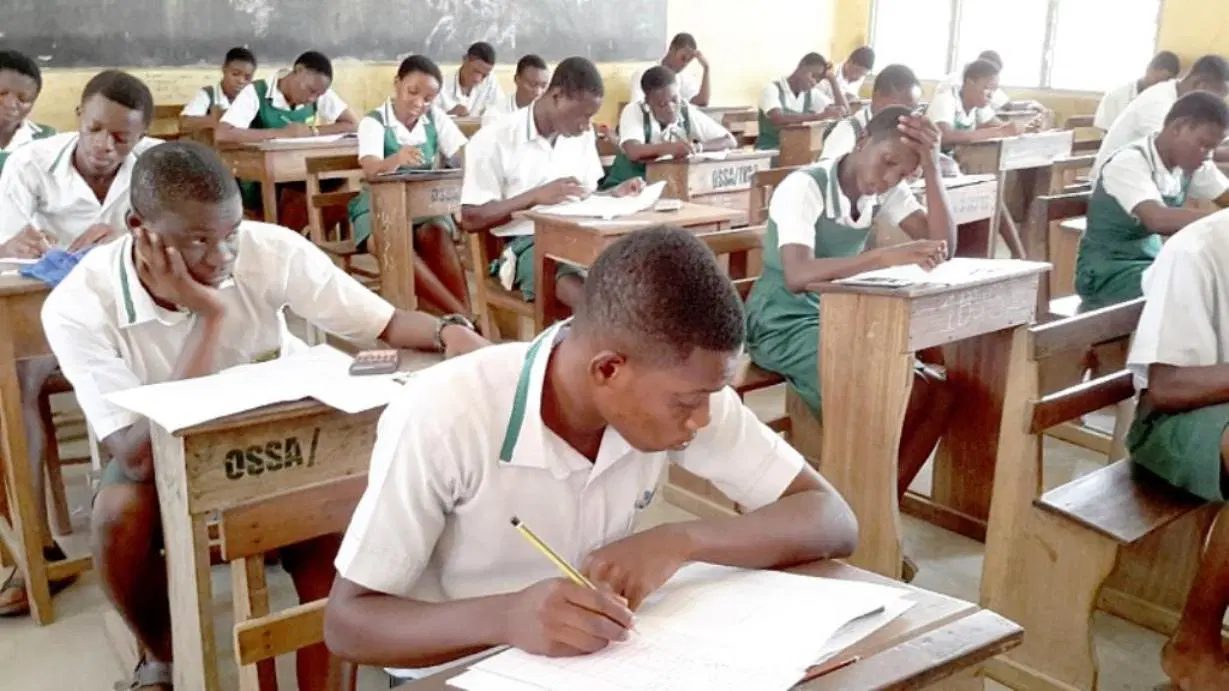
There is a kind of silence that falls in a Nigerian home when it’s time to check WAEC result. The silence of held breath. Sometimes, it is that of a father who took a loan for exam registration he has not repaid. Of a mother who has told her friends that her daughter will be entering university this year. Of a seventeen-year-old who is already mentally sitting in a lecture hall in Ibadan or Zaria or Lagos, who has rehearsed a response when friends and cousins ask what is your course of study.
And then the result loads. And the wrong grade is there. Or the portal crashes before the page opens. Or the screen says “record not found.” Or the checker card “has been used by someone else already”.
That silence, in that moment, is the sound of a collapsing plan.
This is the emotional reality that sits behind every statistic WAEC publishes. Behind the 8.59% of results withheld in 2026 are 167,486 specific young people, each with a specific story, a specific family waiting, a specific dream that has now been placed in administrative suspension. Behind the 38.32% pass rate of 2025 — the worst in a decade — are hundreds of thousands of futures deferred, some permanently. Not because those students are incapable. But because the system that holds the gate to their futures is broken, expensive, and has never once been held fully accountable.
THE YEAR OF WAITING FOR EXAM RE-SIT
When a Nigerian student fails WAEC, the immediate consequence is obvious: no university admission that year. But policymakers and WAEC officials avoid this discourse, because talking about it would require them to look directly at what their system produces, in a community that equates exam failure with personal failure, and a social environment that offers the failed student two things: shame and time.
Mental health professionals in Ogun State documented a sharp increase in emotional distress among teenagers following the 2025 WAEC results. A Psychiatrist in Aro Psychiatric Hospital, Abeokuta, reports that hundreds of students are increasingly manifesting suicidal tendencies. “These students are under unimaginable pressure” she said.
When students sit for the exam again, they wait another year, more fees, more family and social pressure. The other route is – abandon and join the “informal sector.” Which may mean hawking on expressways in Lagos traffic, damning the authorities and the elements. It could also translate to a slow recruitment into networks that don’t ask for your WAEC certificate because they have other things they want from you.
The Nigerian Observer said it plainly in 2025: “An uneducated and idle youth population is a ticking time bomb.” WAEC as an examination body is helping to light that fuse, at scale.
Consider Deborah, a secondary school leaver from Lagos who finished school in 2024 and spent two years — attempting to clear her English Language result, retaking the examination three times across different schools, before finally succeeding in 2026. Two years of her life. Two years of fees. Two years of watching her mates move ahead while she looped back to the examination hall. Her story went viral on TikTok because it resonated so deeply. Because there are hundreds of thousands of Deborahs, most of whom never get the third-attempt redemption story, most of whom simply disappear into a gap that no institution measures.
The one who wrote on social media “How can I show my parents that this is what I got?” is not a statistic. That is a child dreading the walk from the cybercafe back to home.
PROFITING FROM FAILURE
The system that produces these outcomes is not struggling financially. That is the part of the story that demands the most scrutiny.
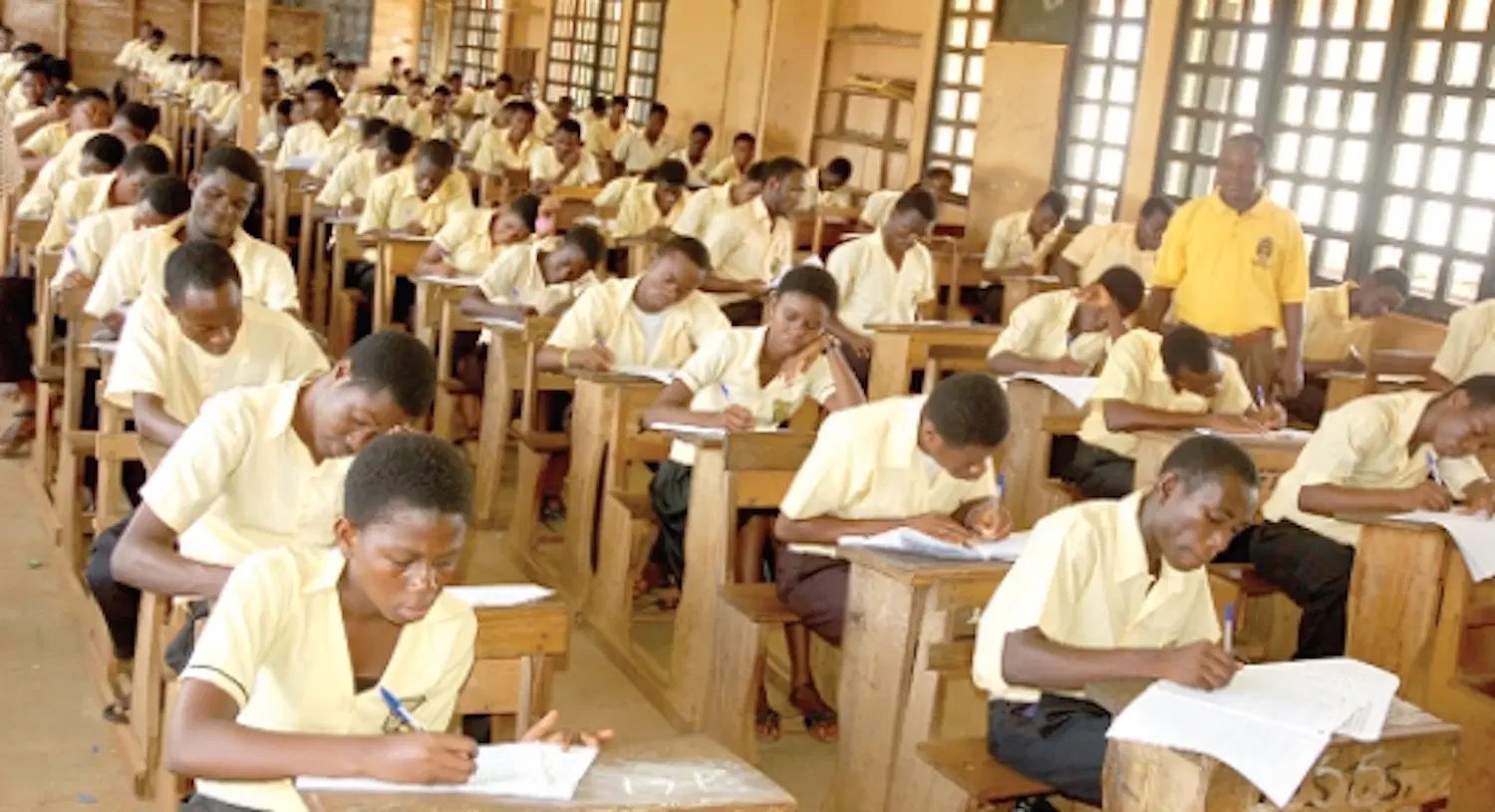
WAEC’s registration fee has risen approximately 94% between 2019 and 2025 — from N13,950 to N27,000. Now the Federal Government has approved a further increase to N50,000 from 2027, an 82% jump in a single year. Civil society groups have condemned it as unconscionable.
The Campaign for Equal Rights and Opportunities for All Nigerians called it insensitive. Nobody in the Ministry of Education published a cost justification. None was demanded. None was given.
Do the arithmetic. Based on 2026 WAEC enrolment of approximately 1.96 million candidates, a N50,000 fee generates roughly N98 billion in registration revenue. Add NECO’s 1.37 million candidates at the same rate and the combined take approaches N166 billion. Per year. From families that, in many cases, cannot afford to eat three meals a day.
Meanwhile, WAEC generated N34 billion in 2023 and spent N40 billion — a N6 billion deficit that it could not explain to the House of Representatives, presenting a cashbook when bank statements were demanded, stonewalling seven out of eight document requests from the investigating committee. The body obtained a N5 billion loan in 2022 to purchase customised calculators — the kind of procurement decision that required a Ministerial Board approval WAEC apparently bypassed — and a separate N532 million contract for office construction in Taraba, where 50% was paid upfront in breach of the Public Procurement and Financial Regulations Act.
The phrase “customised calculators” deserves to sit in the reader’s mind for a moment. N5 billion. For calculators. From an institution that cannot build a result portal that survives two million simultaneous users.
A think tank, iRead To Live Initiative, put the pattern plainly: “Examination registration fees have been revised upward repeatedly, across multiple administrations, without any cost justification published for public scrutiny. The institutions that collect billions of naira annually from Nigerian families have never been required to show their financial workings to the public they serve.”
BUSINESS MODEL: FAILURE IS PROFITABLE
And here is where it becomes structural rather than merely corrupt: The business model is ruthless and says failure is profitable. Every candidate who fails WAEC and re-sits pays again. Every candidate whose result is withheld while malpractice is investigated loses a year and eventually pays to rewrite. The re-sit industry, the result-checker card market, the November/December alternative sitting — every mechanism that exists because the May/June sitting failed is a fresh revenue event. A system designed around accountability would obsess over reducing failure rates. A system designed around extraction has quieter incentives.
This is akin to deliberate engineering, because WAEC as an institution, a monopoly of sorts, makes more money from failure than it loses in reputational damage.
SOUTH AFRICA’S UMALUSI —IS AN ACCOUNTABLE EXAM SYSTEM POSSIBLE IN AFRICA?
Across the continent, South Africa runs a national school certification system that, while imperfect and subject to its own political pressures, demonstrates what governance of high-stakes examinations looks like when accountability is structurally embedded rather than performatively promised.
The National Senior Certificate (NSC) — colloquially called the Matric — is overseen by Umalusi, the Council for Quality Assurance in General and Further Education and Training. Umalusi’s role is explicitly separated from the administration of examinations. It does not run the exams. It watches over those who do: the Department of Basic Education, the Independent Examinations Board (IEB), and the South African Comprehensive Assessment Institute (SACAI). It approves the release of results only after independent quality assurance processes have been completed.
In January 2026, when Umalusi chairperson Professor Yunus Ballim addressed the media to approve the release of 2025 Matric results covering over one million candidates across four qualifications, his statement was specific, documented, and accountable: external moderation of question papers had been completed; audit of administration systems for readiness had been done; marking standardisation meetings had been attended; verification of marking quality in sampled subjects had been performed. Where a breach occurred — examination papers leaked at certain Pretoria schools, affecting approximately 40 candidates — Umalusi investigated it independently, confirmed it was localised, and said so publicly.
“In a system of this scale,” Ballim said, “perfection is not possible anywhere in the world. What matters is that the systems are strong enough to detect problems early and to act decisively to protect the credibility of the certificates we issue.”
Read that sentence twice. Then ask when the last time was that a senior WAEC official said anything remotely similar — not as a defensive press release issued three days after a crisis, but as a pro-active, pre-result, publicly documented assurance of institutional process.
Umalusi publishes its quality assurance framework. It discloses its standardisation processes. It has an official complaints pathway. It has been doing standardised marking since its predecessors began the practice in 1918. When a controversy arose around the adjustment of 2010 Matric results, Umalusi chose transparency over silence — releasing a detailed account of its standardisation decisions because, as its statement at the time said, “failure to share with the South African public the quality assurance processes and decisions of Umalusi will potentially cause irreparable damage to Umalusi and the qualifications it quality assures.”
That is institutional self-awareness. The recognition that credibility is the product, and that opacity destroys the product.
Does South Africa’s system fail students? Absolutely. The matric pass rate for historically disadvantaged schools remains deeply unequal. Rural candidates face structural disadvantages that no examination body can fix alone. Political interference in the system is an ongoing concern. But the architecture of accountability — independent quality oversight, published processes, separated responsibilities, transparent appeals — means that when the system fails, citizens have the mechanisms to demand answers. Answers are given, or they can be compelled.
In Nigeria, WAEC is examiner, quality arbiter, and final appeals body, all in one institution, with no equivalent of Umalusi watching from outside. The result is an institution that answers to no one in practice, even when Parliament theoretically calls it to account.
CAMBRIDGE INTERNATIONAL— WHAT WORKS IN THE WEST, AND WHAT IT REVEALS
Cambridge International Education — the body descended from the University of Cambridge Local Examinations Syndicate founded in 1858 — operates in more than 160 countries across 10,000 schools. In West Africa, it runs in elite private secondary schools whose fees are already out of reach for the majority of Nigerian students. But the comparison is instructive not because the systems serve the same students, but because it reveals what examination governance at the upper end of institutional design looks like.
Cambridge publishes annual reports. It publishes grade boundaries and mark schemes publicly after each examination series. It maintains a Principal Examiner’s report for every subject, explaining where candidates performed well, where they struggled, and what the examining team observed. A student who disputes a result can request a review, a remark, or access to their marked script — through a clear, documented, fee-structured process with defined timelines. The process is not cheap, but it is transparent and bounded.
When Cambridge’s digital systems experienced disruptions — which they have, including a 2020 result crisis during the COVID-19 period — the institution communicated in real time, published its decisions, and was publicly accountable to schools, parents, and governments.
Structurally, Cambridge is constituted as a department of the University of Cambridge, which is itself a non-profit institution. Its governance framework is academic, not bureaucratic. Its leadership is accountable to a governing body with published membership. Its financials are disclosed as part of Cambridge University Press and Assessment, whose annual report is publicly available.
None of this makes Cambridge without fault. It has been criticised for cultural bias in its curricula, for creating a two-tier system that advantages wealthy schools, and for not adequately indigenising its examinations to reflect the contexts of the African, Asian, and Caribbean students who now constitute a significant portion of its candidates. Those are legitimate criticisms.
But the contrast with WAEC is structural, not stylistic. Cambridge’s failures are subject to external scrutiny, published evidence, and documented accountability. WAEC’s failures are insulated by opacity, defended by bureaucratic stonewalling, and absorbed by the students who have no other option.
THE HUMAN COST FACTOR
Let us try to make the aggregate human cost specific, because statistics have a way of making suffering abstract.
Nigeria has over 20 million out-of-school children — the highest number in the world. The out-of-school crisis does not end at secondary school. It continues when students who stay in school fail WAEC. It continues when those who fail cannot afford to re-sit. It continues when those who pass WAEC cannot get JAMB scores that meet the required threshold. At each stage of this assembly line, a child falls through a gap, and the institution responsible for that stage collects its fee and moves on.
A family with three children sitting WAEC across three years, under the proposed N50,000 fee regime, spends N150,000 on registration alone. Add the e-PIN checker cards. Add tutorial and remedial fees for the child who fails and must re-sit. Add transport costs to examination centres. Add the indirect cost of a child who spends an extra year at home — food, clothing, lost productive potential. The total extraction from a single poor household attempting to get its children certified can easily exceed N300,000 to N500,000 across those years.
The N50,000 fee, a civil society group noted, now exceeds the monthly income of millions of Nigerian informal sector workers. The minimum wage context is not incidental. It is the point. When you price the gateway to formal employment above what the formal economy pays its lowest workers, you are not running an education system. You are manufacturing exclusion and calling it a certification process.
And who sits in the comfortable offices while this happens? Who approves the budget that spends N40 billion against N34 billion in revenue? Who authorised the N5 billion loan for calculators that the parliamentary committee is still demanding receipts for? Who decided that in 2026, with nearly two million students waiting for results, the result portal did not need to be architected to handle two million simultaneous queries?
These are not technical questions. They are questions about power, accountability, and whose comfort is being protected at whose expense.
WHAT MUST BE PRESSURIZED TO CHANGE.
Reforms are not complicated to list. They are complicated to implement because implementation requires that someone with power chooses to lose something in the process.
- Separate examination administration from quality assurance as a standard governance design.
Create an independent Nigerian equivalent of South Africa’s Umalusi — a body with no financial stake in examination fees, mandated to independently certify every result cycle before release and to publish its findings publicly.
- Cap or restructure the fee model.
A N50,000 flat fee in an economy where millions earn less monthly is not a fee. It is a barrier. Implement a tiered structure — heavily subsidised rates for public school candidates in low-income areas, with the true cost distributed across wealthier institutions and through federal allocation. Other countries have done this. It is a policy choice, not a technical impossibility.
- Professionalise the digital infrastructure.
Commission an independent technical audit of WAEC’s entire digital architecture. The result portal, the e-PIN system, the checker database — all of it. Publish the findings. Then procure the rebuild on open tender with performance penalties for downtime during result release periods. A two-million-user spike is predictable. It happens on the same day every year. Not preparing for it is negligence, and unfortunate.
- Mandate full financial disclosure.
Every naira collected as examination fees is public money. Publish independently audited accounts annually, in full, online, with line-item expenditure. Any procurement above N50 million to be subject to prior open tender documentation. This is already required by law. Enforce it.
- Establish a statutory right of result appeal.
Any candidate who disputes a result must have access to a defined, affordable, time-bound appeals process — review of marking, access to marked script, and where warranted, independent re-marking. This right should be enshrined in legislation, not left to WAEC’s administrative discretion.
And most fundamentally: someone must demand these things loudly enough and consistently enough that silence is no longer the safe option for those in power.
Nigeria has produced two million candidates for this examination. Two million families. Two million sets of expectations, fears, debts, and dreams. They deserve a system that treats the gravity of that trust with something more than a cashbook and a portal that crashes on results day.
The SYSTEM does not have to be broken. It is broken because breaking it serves someone. Fixing it requires deciding, at the level of real institutional power, that it should serve the students instead.
That decision has not yet been made.


