


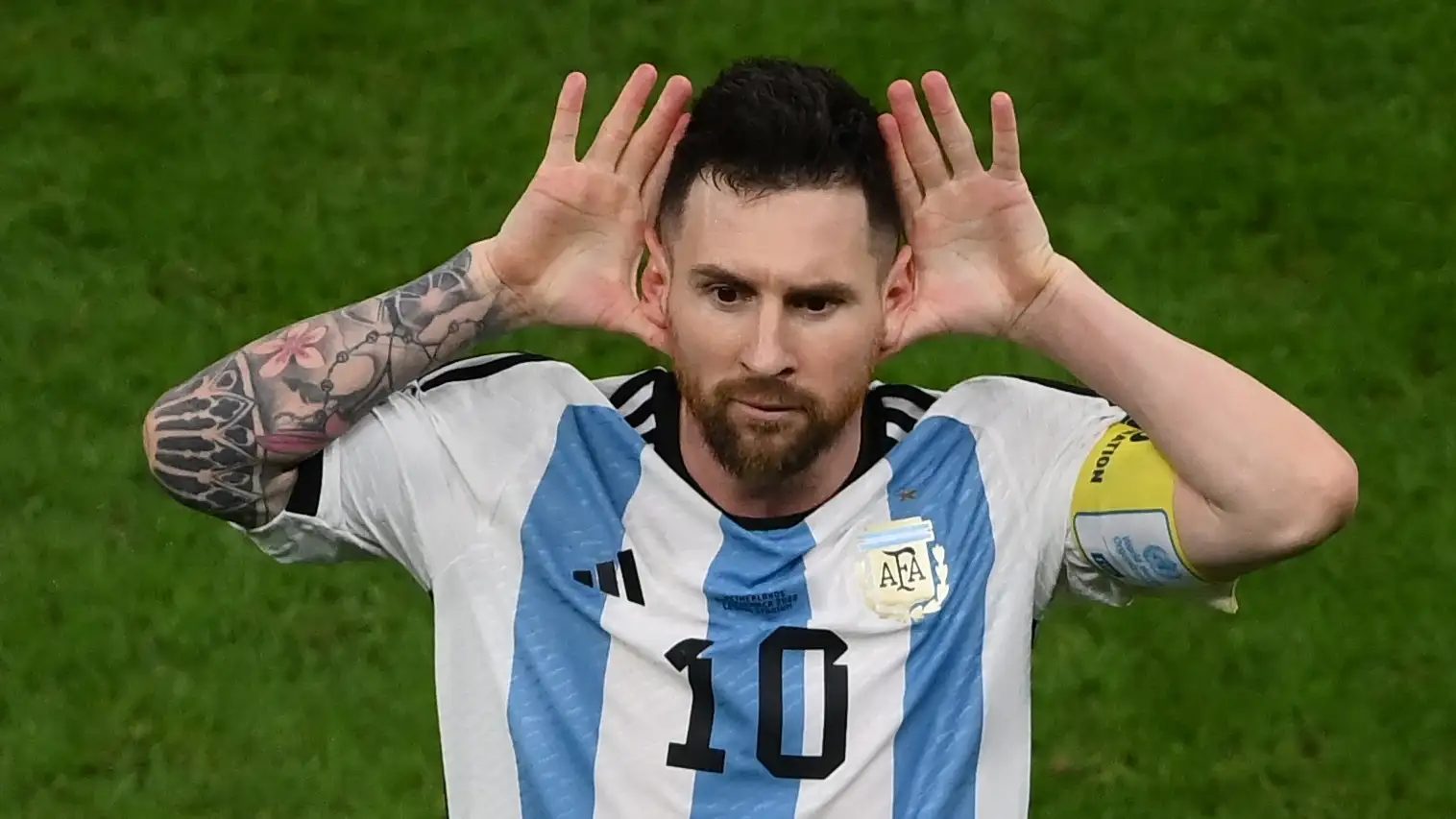

Messi announced his retirement from professional football on Instagram, as he has always communicated his deepest truths — quietly, personally, without fanfare. But nothing about what Lionel Messi wrote on Monday morning was quiet.
The message was simple and devastating:
“After the time that passed since the final, thinking about it a lot, I want to communicate to everyone that I am retiring from the national team.”
And with that, the most consequential international career in the history of football came to its end.
He is 39 years old. He has nothing left to prove. And yet the words, by his own admission, still stung.
“It was a decision that hurt — and still hurts deeply — but I understand that the time has come,” he wrote. “I swear to you that I always gave it my all — not just in these last few years when we won everything, but before that too; I always fought and left everything on the field for this jersey, to bring you joy and make you feel proud to be Argentine through football.”
Those words deserve weight. Because for most of his career, pride was not what Argentines felt about Messi in the blue and white. For most of his career, they felt something far more complicated.
The Long Road to Stardom
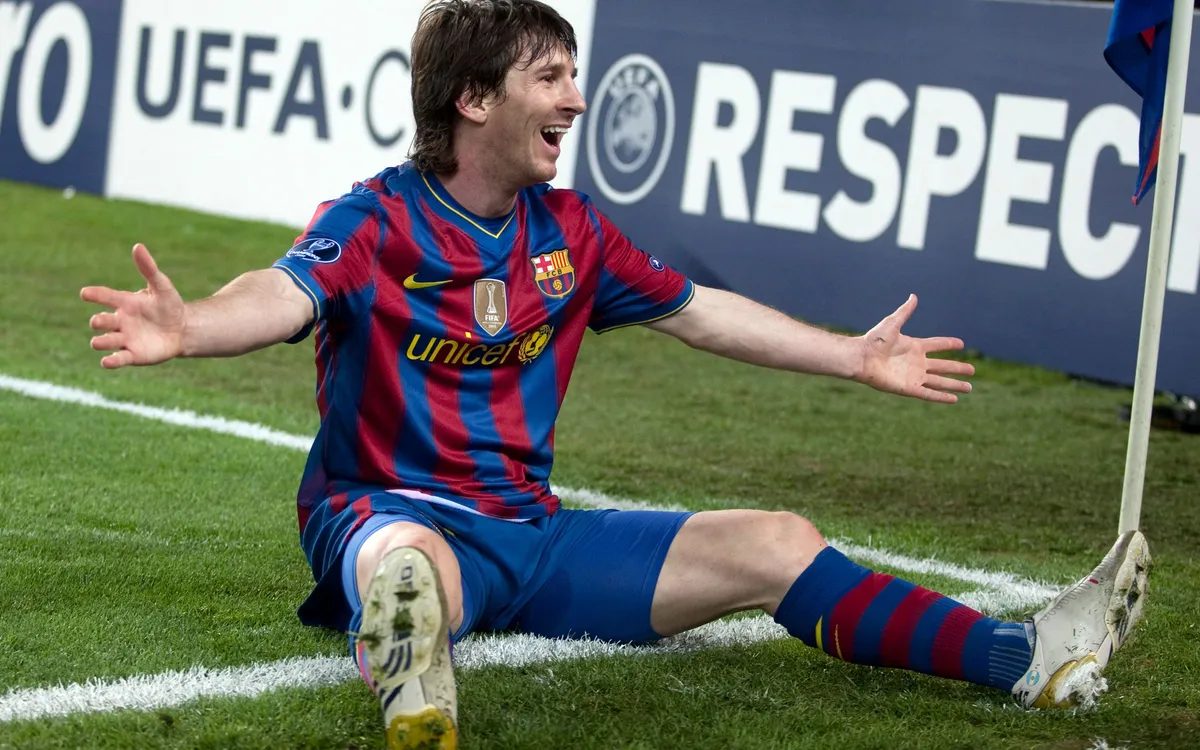
Lionel Messi left Rosario as a boy. He left because his body was not growing the way a footballer’s body should, and Argentina could not pay for his treatment. Barcelona could. And so it was Spain — not Argentina — that raised him. The Camp Nou became his Cathedral. La Masia became his home.
He won everything a club player could win. And still, for years, Argentina felt like a jersey that didn’t quite fit.
At the 2006 World Cup, he was a teenager on the periphery of a squad built around others. By 2010, he was the main man — and Argentina crashed out to Germany. The 2014 World Cup brought him to a final in Rio, where Germany prevailed. He won the Golden Ball as the tournament’s best player and accepted it with the look of a man who had received the wrong prize. Then came successive Copa América final defeats, and after one particularly brutal loss in 2016, Messi announced his international retirement in a moment of raw anguish — a knee-jerk reaction that shocked the world and lasted, mercifully, only a few months before he reversed course.
The narrative was cruel and persistent: Messi, the greatest player alive, could not win for Argentina. Maradona had done it in 1986. Messi, for all his magic, could not. The comparison was inescapable, and it was used as a weapon.
Qatar: The Redemption
Everything changed on the night of December 18, 2022, in Lusail, Qatar.
Argentina’s 2022 World Cup run was a masterpiece of resilience — a shock loss to Saudi Arabia in the group stage, followed by a relentless, unbeaten march through Mexico, Poland, Australia, the Netherlands, Croatia, and finally France in the most dramatic final in World Cup history. Messi scored twice in normal time. France equalised. Extra time changed nothing. Then came penalties. Messi stepped up first. He scored. Argentina won.
The triumph ended a 36-year World Cup drought and, in the eyes of many, cemented Messi as the greatest player of all time, closing the last gap in a résumé that already included seven Ballon d’Or awards, four Champions League titles, and ten La Liga crowns. He lifted the trophy with tears streaming down his face. The boy from Rosario had finally brought the World Cup home.
And he was not done.
Miami, and the Last Dance
In 2023, Messi stunned the football world by choosing Inter Miami over lucrative offers from Saudi Arabia, joining MLS in a move that reshaped American soccer’s profile entirely. Critics called it a retirement tour. They were wrong. Across the 2024 and 2025 seasons, Messi averaged 24.5 goals and 13.5 assists per season for Inter Miami, and he helped the club to the 2025 MLS championship. He was not winding down. He was burning bright.
At 39, he arrived at the 2026 World Cup in North America in exceptional form, scoring eight goals and providing four assists — finishing as the tournament’s second-highest scorer. He carried Argentina to the final. He dazzled. He made the whole world remember, one final time, exactly what they were witnessing.
But Spain were waiting. And Spain, on July 19th in New Jersey, were better. Argentina fell 1-0 in extra time — a heartbreaking defeat that denied Messi the chance to become the first man to lift back-to-back World Cup trophies as captain.
Grief, and the Final Reckoning
Then came something heavier than football. Following the loss in the final, Messi’s father Jorge — his lifelong companion and agent — passed away in August. In the wake of that grief, Messi had spoken of having “serious doubts” about continuing to play football of any kind “for much longer.”
He had actually made his decision to retire from international football two days after the World Cup final, but delayed announcing it publicly because of his father’s health. The announcement, when it finally came today, carried the weight of both losses — a World Cup final and a father.
Messi noted in his statement that the emergence of a new generation of Argentine players also influenced his decision — a characteristic act of grace from a man who has always understood that the shirt is bigger than the man who wears it.
What He Leaves Behind
Messi led Argentina to Copa América titles in 2021 and 2024, the 2022 World Cup, the 2022 Finalissima, and a World Cup final appearance in 2026 — a dramatic and complete turnaround for an international career that had previously included defeats in the 2014 World Cup final and successive Copa América finals. Twenty-one years. Six World Cups — joint record alongside Cristiano Ronaldo. A story that ran from teenage prodigy to grey-templed patriarch, from villain in Buenos Aires to national god.
His journey with the Argentina national team — one of frustration, redemption, and ultimately glory — will forever stand as one of the great narrative arcs in sports history.
He will continue at Inter Miami, whose contract with him runs through 2028. There will be more goals. More assists. More moments that make you stop whatever you are doing and just watch. But the blue and white is folded now, placed carefully in the drawer, beside the World Cup medal and the memory of his father.
Lionel Messi gave Argentina everything. In the end, Argentina gave him the only thing that ever truly mattered — a chance to call himself a champion, not just a genius.
Messi has finished his service. The rest is legacy.


